ServicesEquipment Sales
Loading Dock Equipment Sales in McAdoo
Buying dock equipment is a big decision, and the wrong capacity or size costs you for years. We measure your dock, ask about your trucks and forklifts, and recommend equipment that fits. Once it's in, we check back and show your crew how to look after it.
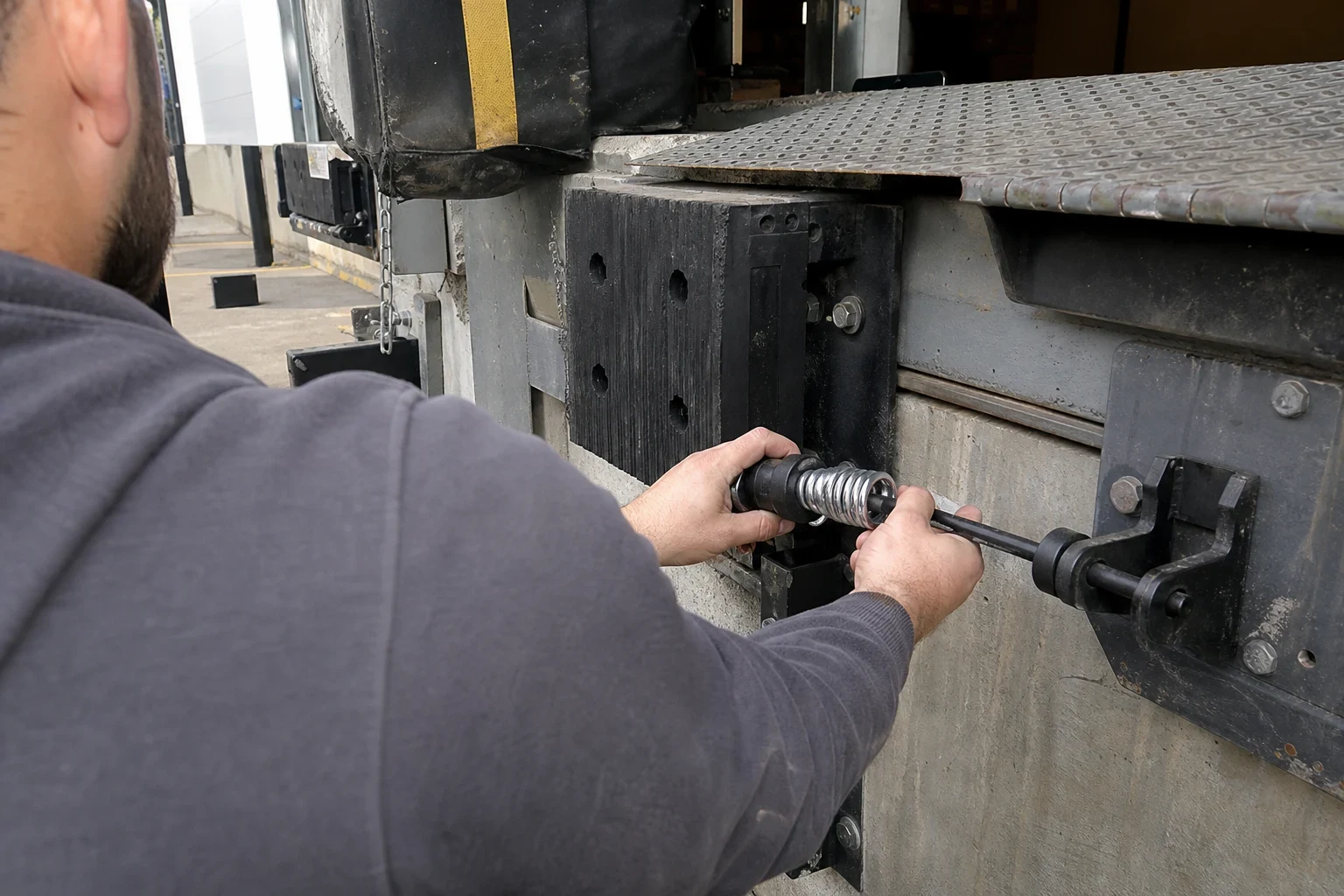
Equipment Chosen Around How Your Dock Actually Works
We sell the equipment that keeps a loading dock moving: dock levelers, vehicle restraints, overhead doors, high speed doors and rolling grilles. Before we recommend anything, we want to know what rolls up to your doors. A grocery dock taking refrigerated trailers all day needs something different from a manufacturer that ships a few flatbeds a week.
Most of the problems we see with newer equipment come from a poor match at the start. A leveler rated too light for a loaded forklift, a lip too short for the trailers you receive, a door that can't handle the number of cycles your shift runs. Getting those numbers right up front is the cheapest fix there is.
Selling you the equipment isn't the end of our part. Once it's installed, we come back to see how it's holding up and walk your team through the simple checks that keep it running.
What You Get When You Buy From Us
- A measured site visit
- We measure pit dimensions, door openings and dock height, and note the condition of the concrete and curb angles. Those numbers decide what will fit without surprise rework.
- Capacity matched to your loads
- We look at your heaviest forklift, the loads it carries and how fast it crosses the dock. Leveler capacity has to account for impact, not just static weight, so we size for how your drivers really work.
- Options explained in plain terms
- Hydraulic, air-powered or mechanical levelers. Hook-style or wheel-based restraints. Insulated sectional doors or high speed doors. We tell you what each one does well and where it falls short for your building.
- A written, line-item quote
- You get each piece of equipment, the controls and any pit or electrical work listed separately. You can see exactly what you're paying for and decide what to do now and what can wait.
- Installation by the same people
- Our Loading Dock Equipment Installation crew sets what we sell, so the measurements and the plan stay in one set of hands.
- A check-back visit
- We return once the equipment has been in use for a while, look it over and answer the questions your crew has run into. Then we leave you with a short care routine.
Signs It May Be Time for New Dock Equipment
The same unit keeps failing
When one door or leveler calls for a technician every few months, those repair bills can pass the price of a replacement. We'll tell you plainly which choice fits your dock.
Your trailers have changed
A new carrier, more refrigerated trailers or a switch to box trucks can land outside the range your leveler handles. Gaps at the lip and steep grades slow loading and wear on forklifts.
Bigger lift trucks or heavier loads
Heavier forklifts or loads can push an older leveler past its rating. Look for split welds and a sagging deck.
No restraint at the door
A trailer that creeps or leaves early is a serious hazard. A restraint with signal lights lets drivers and dock staff see when it is safe to load.
Doors that can't keep up
A slow door left open through a Pennsylvania winter lets building heat out for months. A faster or better-insulated door can cut that loss and keep traffic flowing.
How Buying Equipment With Us Works
- 1
A phone conversation
You tell us what's going on at your dock and what you're hoping to fix. We ask about your trailers, forklifts and daily volume.
- 2
We visit and measure
We come to your facility, measure each position and look at the pit, the doors and the power available. We take photos so you can see what we found.
- 3
You get a clear recommendation
We go over the options that fit, along with a written line-item quote. If something you have can be repaired instead, we'll say so.
- 4
Install on a schedule that suits you
We plan the work around your receiving schedule. Where possible, we take only one position out of service at a time, so trucks can still unload at the others.
- 5
We check back
Once the equipment has seen some real use, we return to inspect it, adjust anything that needs it and show your team what to watch for.
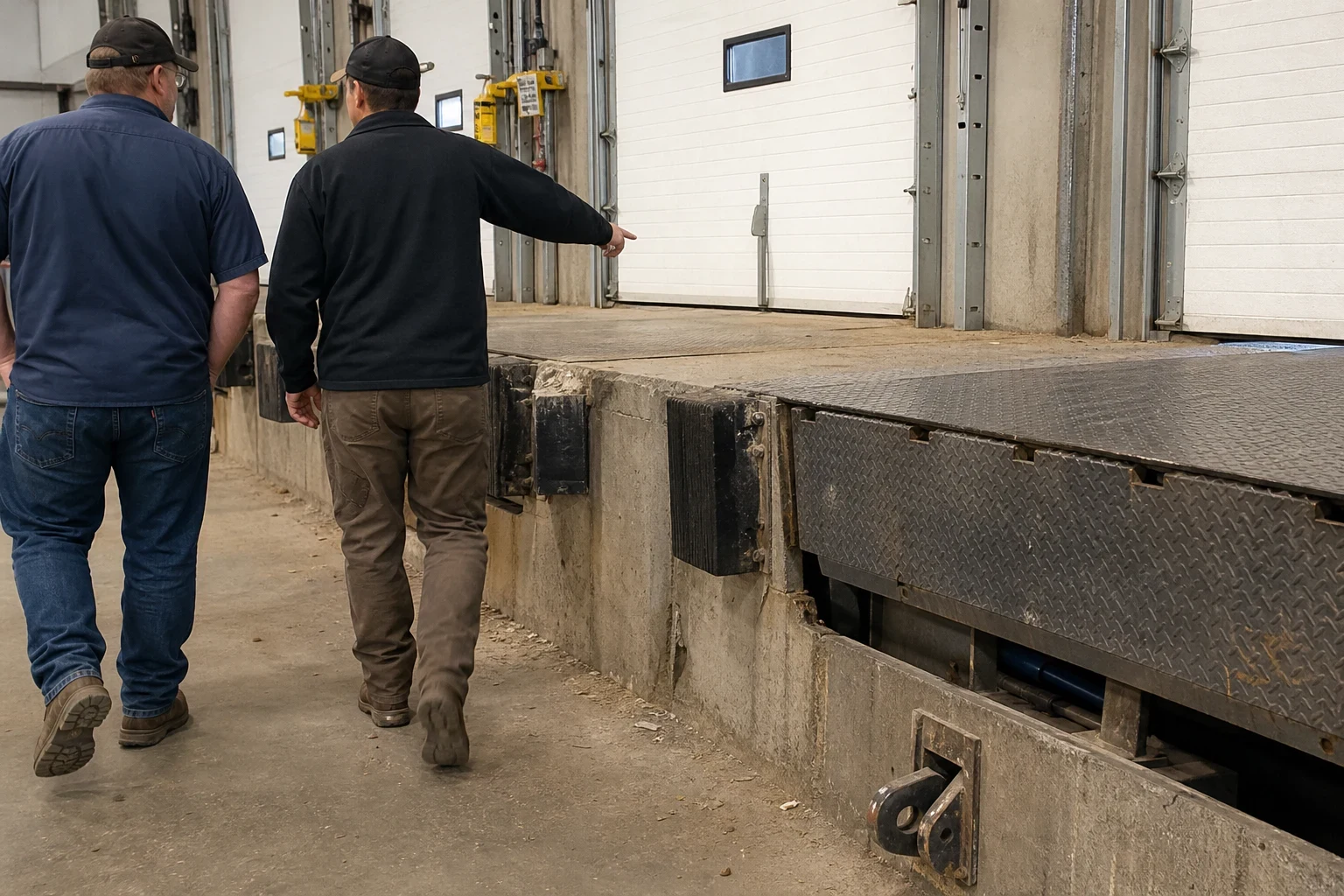
What Goes Into the Cost of New Dock Equipment
Two docks can look alike and still need very different equipment, so we take measurements before we price anything. Each item gets its own line on your quote, which shows where your money goes. The points below shape the total the most.
- Kind of equipment and its rating
- A hydraulic leveler built for heavy capacity costs more than a lighter mechanical model. The right one depends on what you move and how many times a day the dock cycles.
- Condition of the pit
- If the pit is cracked, out of square or an odd size, it may need concrete work or a custom-sized unit before anything new can be set.
- Power and controls
- Powered levelers, restraints and high speed doors all need the right electrical service. Linking the restraint, leveler and door together takes more parts, and it makes the dock safer.
- Number of positions
- Outfitting several doors at once is often more efficient than doing them one by one, and using the same equipment at every door gives your crew a single system to learn.
Questions About Buying Dock Equipment
Something not covered here? (570) 526-4929
Will a new dock leveler fit in my existing pit?
Often it will, but we confirm that by measuring. Pit width, length and depth vary between buildings and older equipment. If your pit is an unusual size, we'll tell you whether a matching unit is available or whether the pit needs work first.
How do I know what leveler capacity I need?
We start with the weight of your forklift plus its heaviest load, then factor in how fast it crosses the leveler and how many times a day. Speed and frequency add impact, so the rating should sit above the simple total. We'll walk you through the math during the visit.
Do I need a vehicle restraint if I already use wheel chocks?
Chocks help, but they depend on someone placing them every time, and they can slip on ice or worn concrete. A restraint holds the trailer at the dock and its lights tell drivers and forklift operators when it's safe. Many facilities add restraints for that reason.
Should I repair my old equipment or replace it?
It depends on its age, how often it fails and whether parts are still available. We'll look at it and give you a straight answer. Sometimes a repair and our Loading Dock Preventative Maintenance program buy you years.
What happens after the equipment is installed?
We walk your team through how it works and the daily checks worth doing. Then we come back once it's been in use to inspect it, make adjustments and answer questions. If you'd like ongoing care beyond that, we can set up a maintenance schedule.
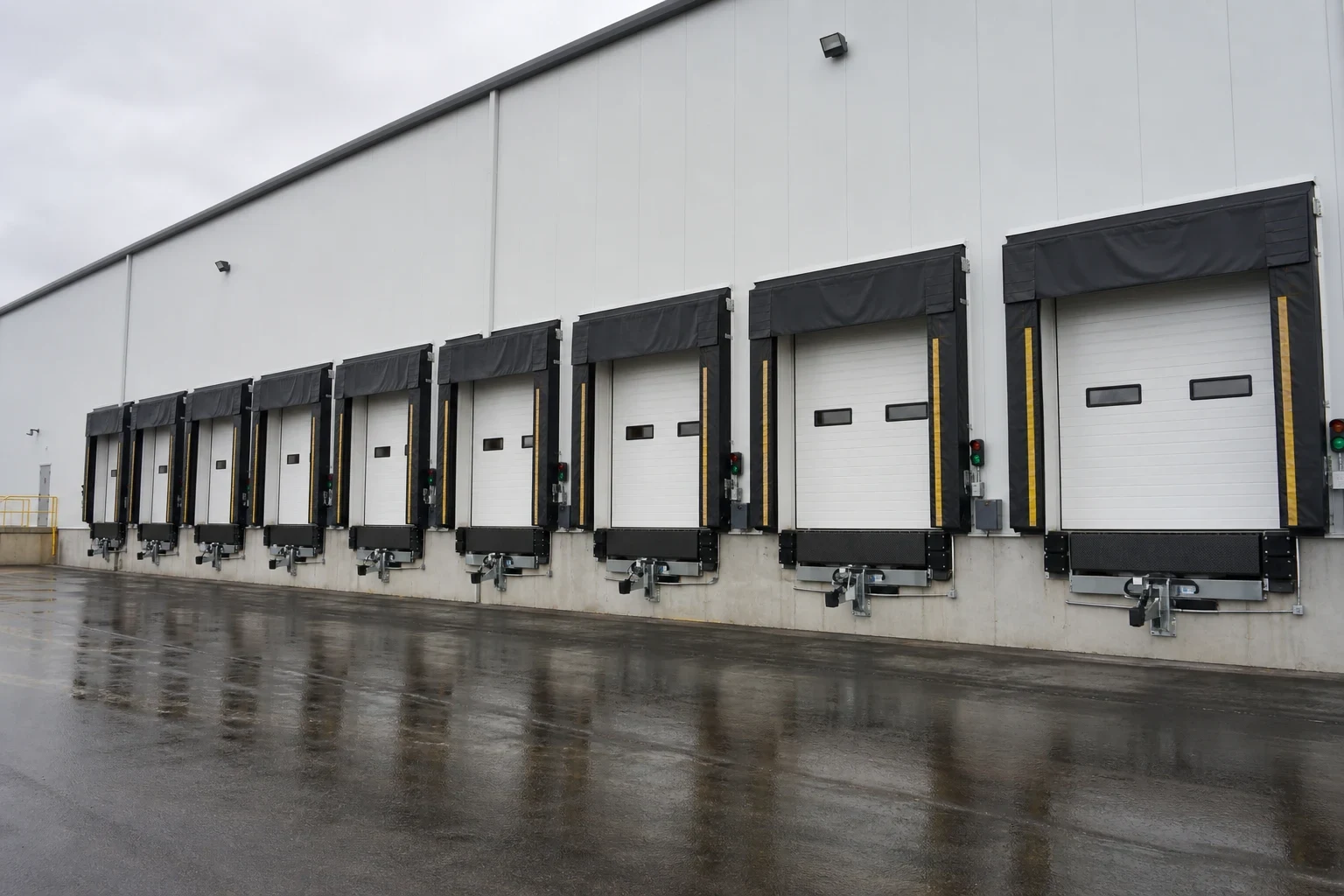
Let's Find the Right Equipment for Your Dock
Tell us what's slowing your dock down and we'll set up a visit to measure. We serve facilities in McAdoo, Hazleton, Tamaqua and the towns around them.